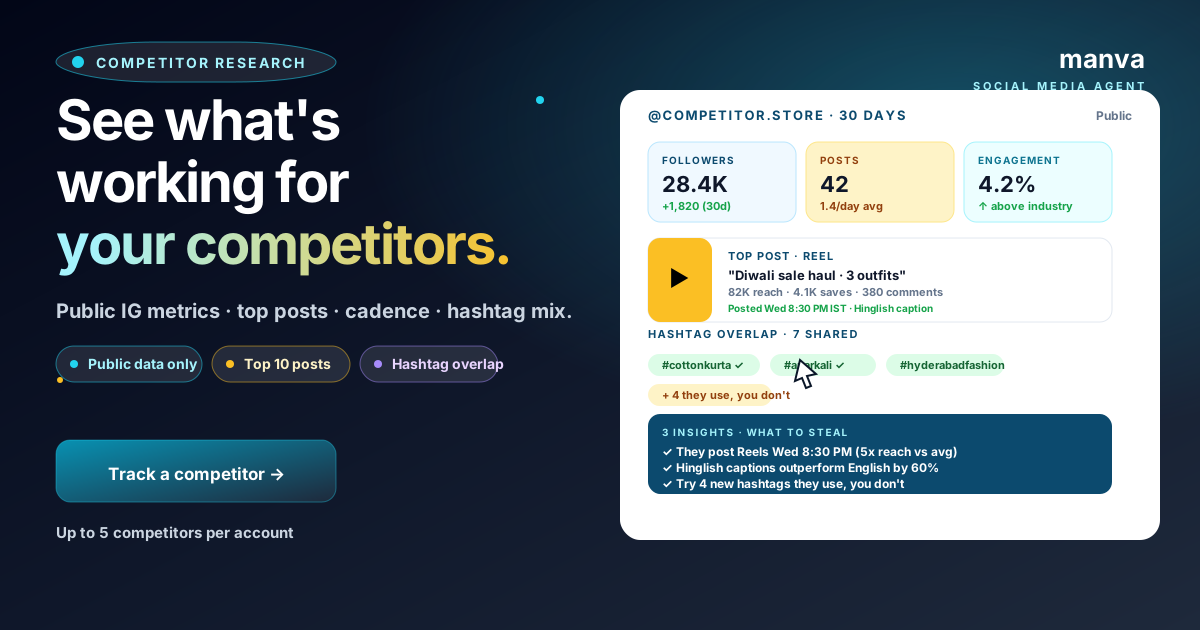
You don't need to copy your competitors. You need to understand which 3 things they do that work — and adapt them.
Manva tracks 5 competitor accounts using only public Instagram data — same as what anyone can see by visiting the profile. No scraping, no privacy violations.
What Manva tracks
- Follower growth — 30/60/90-day trend
- Posting cadence — posts/week, by day & time
- Top 10 posts — by reach proxy + engagement
- Hashtag mix — what they use, what overlaps with you
- Caption patterns — language, length, hooks
- Reels vs feed mix — and which performs
Setup (60 seconds)
- Manva → Tools → Competitors → Add
- Paste the competitor's IG handle (must be public Business/Creator)
- Manva builds the dashboard within 24 hours
What to look for in the first scan
| Metric | What "winning" looks like | How to copy |
|---|---|---|
| Posting day/time | Wed 8:30 PM IST · 5x avg reach | Test same slot for 4 weeks |
| Reels vs feed ratio | 2 Reels/week · 3x reach | Add 2 Reels/week to your queue |
| Caption language | Hinglish · 3-line hook | Match for tier-2/3 audiences |
| Hashtag overlap | 4 they use, you don't | Add the 4 to your saved set |
Don't copy posts. Copy patterns. Their cotton kurta hook in Hinglish ≠ your jhumka hook in Hinglish — same structure, your product.
Track up to 5 competitors free
Public-data only. Updated daily. Pair with your Brand DNA for one-click tactic adoption.
Try free for 7 daysCommon mistakes
1. Tracking 20 competitors
Useless. You'll never act on the data. Pick 3-5, deeply.
2. Copying their content
Steals tone, breaks brand. Steal patterns, not posts.
3. Watching only follower count
Vanity metric. Engagement rate matters more — a 5K account at 6% beats a 50K account at 0.4%.
4. Ignoring weekly check-ins
Once a week, 10 min, scan the dashboard. That's the cadence.
FAQ
Yes — Manva uses only public Instagram data, the same information anyone visiting the profile can see. No private API access, no scraping behind login. Compliant with Instagram's terms.
Yes. Manva tracks any public Business/Creator IG account globally. Hashtag and time-zone insights adjust automatically.
Daily refresh for tracked competitors. Top-post detection runs every 6 hours.
Track 5 competitors in 1 minute
Public data · daily refresh · pattern insights. Free with every plan.