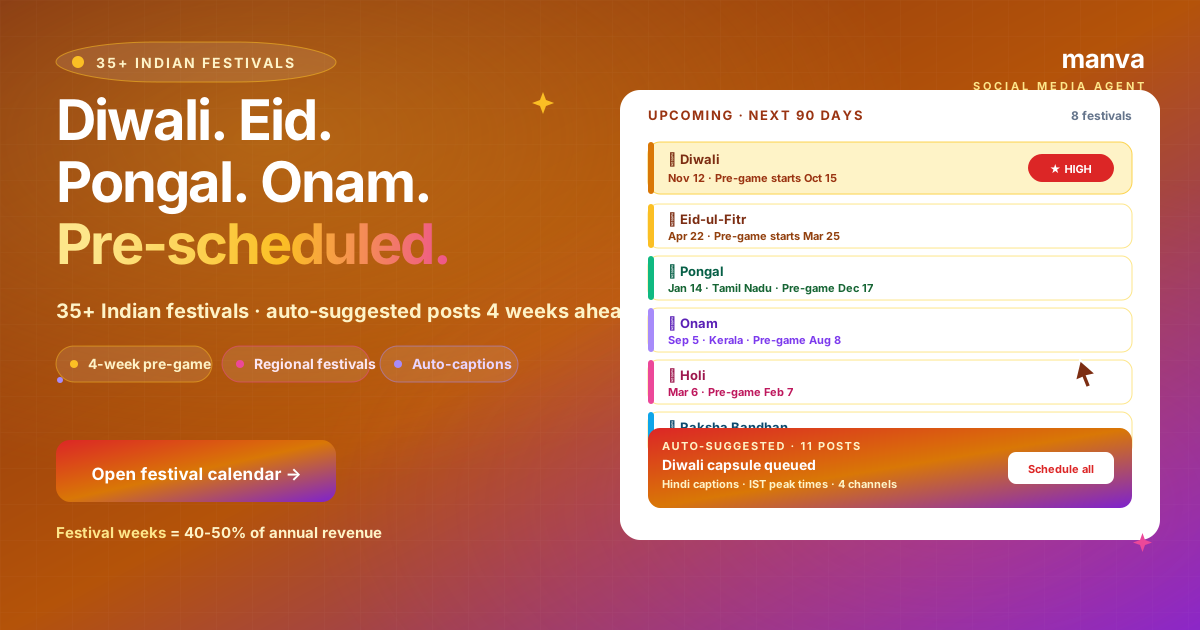
Festival weeks are 40-50% of annual revenue for Indian D2C brands.
Concentrated in 6-8 weeks of the year. The brands that win those weeks aren't the most creative — they're the most prepared. Pre-game starts 4 weeks ahead.
Manva's festival calendar handles the prep. 35+ Indian festivals, auto-suggested posts, festival-specific captions, IST peak scheduling. Free on every Social Media Agent plan.
Why festivals are the highest-ROI marketing weeks of the year
Three structural reasons:
- Buyers are in spending mode. Bonuses get paid before Diwali. Eid means new clothes. Onam means gifting. The intent-to-buy graph spikes.
- Algorithms boost festival content. Instagram and Facebook ride trending hashtags hard during festivals. Festival-themed posts reach 2-3x more than non-festival posts.
- You can charge premium. "Diwali Special Edition" or "Eid Capsule" lets you mark up 15-25% on the same product.
The 35+ festivals Manva tracks
Pan-Indian:
- Major — Diwali, Holi, Raksha Bandhan, Janmashtami, Ganesh Chaturthi, Navratri, Dussehra, Karwa Chauth, Bhai Dooj, Christmas, New Year
- Religious diversity — Eid-ul-Fitr, Eid-ul-Adha, Good Friday, Easter, Guru Nanak Jayanti, Buddha Purnima
Regional:
- South — Pongal (Tamil Nadu), Onam (Kerala), Ugadi (Karnataka/AP), Vishu (Kerala)
- North — Lohri (Punjab), Baisakhi (Punjab), Karva Chauth, Holi
- East — Bihu (Assam), Durga Puja (Bengal), Chhath (Bihar)
- West — Gudi Padwa (Maharashtra), Navratri (Gujarat), Ganesh Chaturthi (Maharashtra)
The 4-week pre-game cadence
The festival posting rhythm that consistently doubles or triples festival-week sales in our data:
| Phase | Timing | Content | Goal |
|---|---|---|---|
| Tease | 4 weeks before | "Festival ready?" / "Are you planning?" | Plant the seed |
| Drop | 2 weeks before | Festival capsule launch · specific products | Build awareness + early buyers |
| Push | 1 week before | Daily WhatsApp broadcasts to opted-in list | Convert warm audience |
| Urgency | 3 days before | Stock running out · last COD cutoff | Force decisions |
| Day-of | Festival day | "Happy Diwali" + thank-you to buyers | Goodwill + repeat-customer setup |
How to use the calendar in Manva
- Open Manva → Tools → Festival Calendar. Filter to the festivals relevant to your audience (e.g. South India only, or Hindu+Muslim).
- Pick a festival, e.g. Diwali. Click Auto-suggest capsule. Manva returns 8-12 post ideas covering tease, drop, push and urgency phases.
- Generate captions in your Brand DNA tone + chosen language. Edit, regenerate, or accept.
- Schedule all with one click. Manva spreads the posts across 4 weeks at IST peak times for each channel.
Festival calendar is free on every plan
35+ festivals · auto-suggested posts · IST peak scheduling · Hindi/regional captions. From ₹149/mo with 7-day free trial.
Try free for 7 daysCommon mistakes
1. Starting only 1 week before
You'll catch 30-40% of the demand. The 60% who decided 3 weeks earlier already bought elsewhere. Pre-game wins.
2. Posting "Happy Diwali" only on Diwali day
That's a courtesy post. Not a campaign. The 4-week pre-game is the campaign.
3. Same caption template for every festival
Diwali ≠ Eid ≠ Pongal. Each has distinct visuals, words, sentiments. Manva's AI knows this; use the festival-specific captions, not generic.
4. Skipping regional festivals
For a Kerala-focused brand, Onam ≫ Diwali in revenue. Filter the calendar to the festivals your audience actually celebrates.
FAQ
Pre-schedule your next festival in 5 minutes
Free festival calendar · 35+ Indian festivals · auto-captions · IST peak scheduling.